How to meet people in Lisbon, Porto or the Algarve through sport
Arrived in Lisbon, Porto or the Algarve and still do not know anyone? See how to find games, build a routine and meet people through sport.

8 September 2026 · 10 min read

Have you just arrived in Lisbon, Porto or the Algarve and still do not have people to make plans with? That is normal. You quickly learn the route to work, find a supermarket and choose a café you like. What usually takes longer is having someone to message on a Saturday morning to ask: “Do you want to play next week?”
After university, meeting people rarely happens by chance. Team sport helps because it gives you a simple reason to show up: there is a time, a sport, a pitch and other people who have also decided to leave the house. You do not need to arrive with a brilliant story or already have a group. Start by playing.
LocalMatch does not promise you automatic friendships. It creates more concrete opportunities: games and activities you can join, meet people gradually and build a routine. The connection happens on and around the pitch, when there is respect, repetition and a desire to come back.
Why sport makes it easier to meet new people
On a first meeting, conversation can feel like an interview: where are you from, what do you do, how long have you been here? In a game, there is a shared activity doing that initial work. People talk about a move, a substitution, where they usually play or the next session. The pressure to “make friends” moves into the background.
There is also something important in repetition. Seeing the same faces at the same time creates familiarity without rushing. First you recognise someone; then you say hello; later you might arrange a team or a coffee after the game. It does not always happen, and it does not have to happen on the first day. But a regular routine gives relationships a real chance to grow.
Choose a sport you will want to return to
There is no universally more social sport. There is the sport where you feel comfortable enough to show up more than once. Football and futsal work well if you like larger groups and a more intense pace. Padel and tennis may suit you if you prefer pairs or small groups. Volleyball, basketball, group running and gym classes have different dynamics, but they share the same advantage: they make it easier for you to have a regular meeting point.
If you are starting again after a long time, choose a game that clearly indicates the level or a relaxed atmosphere. You do not have to prove anything on the first day. Being honest about your experience helps the organiser create balanced teams and makes the game better for everyone.
How to find a game when you are going alone
Going alone is not a problem you need to solve before you start looking. That is exactly why games with available spots exist: you do not need to bring a full team to play. On LocalMatch, search for games by area, sport and time, read the description and see what is included before booking.
For the first time, prioritise three things: proximity, clear information and a time you can repeat. A pitch ten minutes from home or work is more useful than a perfect option on the other side of the city. Consistency matters more than trying to do everything at once.
Arrive a few minutes early, introduce yourself to the organiser and simply say it is your first time with that group. You do not need to ask permission to be there: if you booked a spot, you are part of the game. A short introduction makes it easier to get started and also helps the team include you in the initial choices.
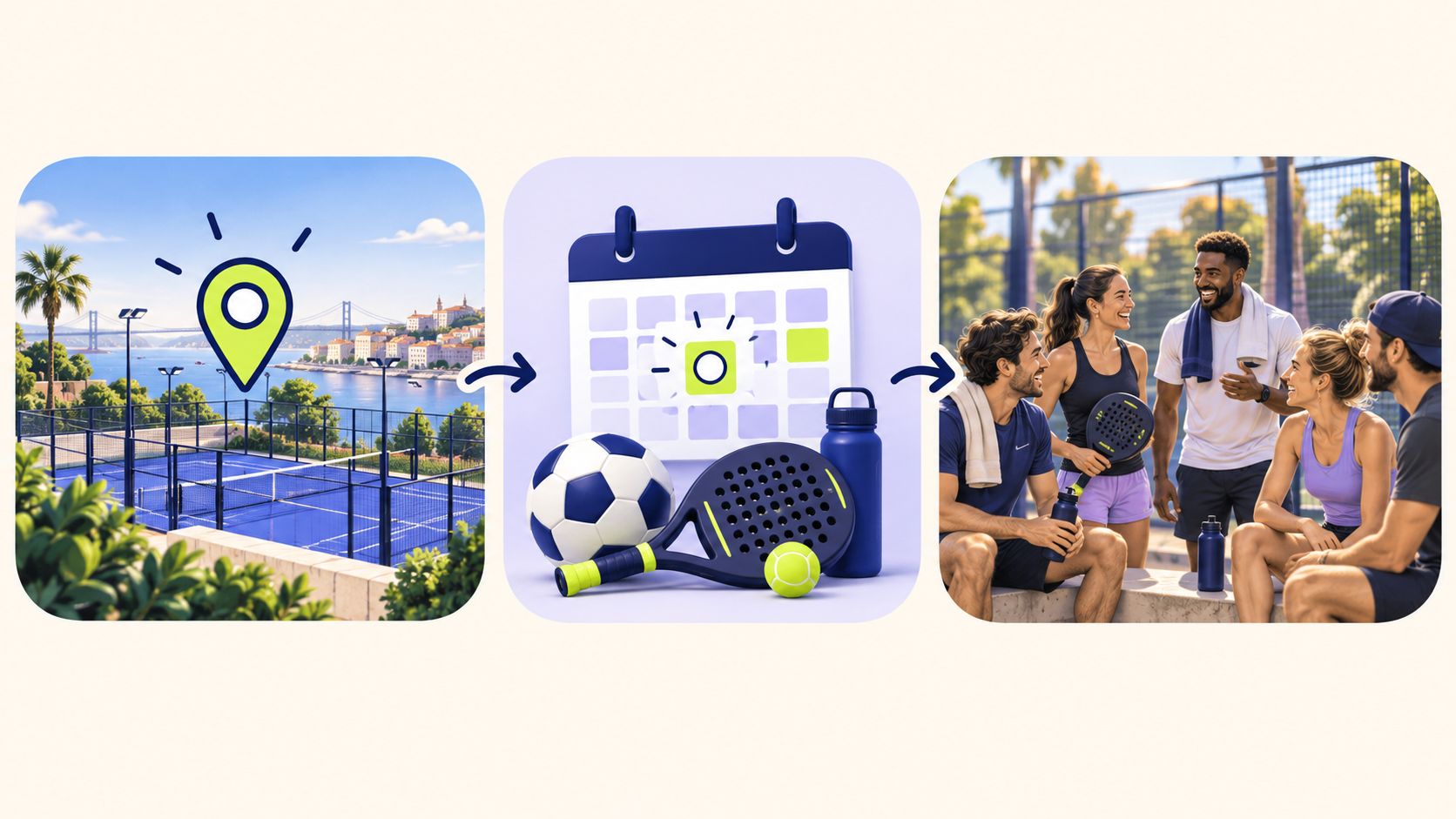
Do not look for a social event: look for a game you can return to
When you arrive in a city, it is easy to feel you have to make the most of everything and meet everyone quickly. That is usually tiring. A regular game is a lighter alternative: it gives you a concrete plan for the week, an activity you already have in common with other people and time for conversations to happen without forcing anything.
Instead of choosing only by the most popular sport, ask yourself: can I get there after work? Does the level seem suitable? Would I like to repeat this time for a month? If the answer is yes, you have found a good starting point.
If you come from elsewhere, you do not have to arrive with a ready-made group
Lisbon, Porto and the Algarve welcome people every year who come to study, work, return to Portugal or try a different season. It is natural not to know yet where people play, what spaces exist or how to find a team. Open games and activities with available spots exist precisely to reduce that barrier to entry.
Do not assume you have to master everything before your first booking. Read the information available, be clear about your level and ask whatever is essential. The aim is not to fit into a closed group; it is to find an environment where you can play with respect and return if it makes sense for you.
Meeting people in Lisbon through sport
Lisbon brings together students, people returning to Portugal, mobile professionals and those moving neighbourhood for work or a new phase of life. With such a spread-out city, a routine that forces you to cross it twice a week tends to disappear quickly. Look close to where you spend most of your days.
Alvalade, Benfica, Campo de Ourique, Alcântara, Areeiro, Parque das Nações and nearby areas such as Oeiras, Amadora or Loures can be good starting points, depending on your route. Do not choose only by postcode: think about transport, the time you leave work and the journey you can maintain even in a busy week. A weekly session near you is a realistic way to meet people in Lisbon, without turning social life into impossible logistics.
Meeting people in Porto through sport
In Porto, the logic is the same: choose an area between home, work, studies and transport. Boavista, Cedofeita, Paranhos, Bonfim, Matosinhos, Vila Nova de Gaia and Maia have very different rhythms, but a regular activity can create a point of contact outside your usual routine.
If you are still discovering the city, start with a time that is easy to keep and let the rest come later. You do not need to wait until you know all of Porto to play. An hour of football, padel or volleyball can also be a simple way to discover neighbourhoods, find local spaces and create connections that do not depend on you already having friends in the city.
Meeting people in the Algarve through sport
In the Algarve, routines can change a lot between seasons. Some people arrive to study, work for a few months, spend a season or start a new life. That is why open games and regular activities are especially useful: they let you take part without having to immediately enter a closed group.
In Faro, Portimão, Lagos, Albufeira, Loulé and other Algarve towns, it is worth looking for a session that fits your day-to-day life, not just the holiday period. Even if you stay for a short time, a recurring activity gives you a more natural way to meet people than relying exclusively on occasional outings.
The five gestures that improve the first game
- Read the description to the end: confirm the sport, time, duration, location and expected atmosphere before booking.
- Arrive early enough: you do not need to show up half an hour before; a few minutes are enough to get to know the space, say hello and enter the game without rushing.
- Be transparent about your level: say if you are starting out or if you have not played for a while. A balanced team is more enjoyable for everyone.
- Respect the group and the space: keep to the times, treat others with consideration and follow the rules of the pitch or gym.
- Come back if you enjoyed it: connection rarely comes from a single session. It is repetition that turns strangers into familiar people.
How to move from a one-off game to a routine
The first game helps you understand two things: whether you like the sport and whether you feel good in that environment. If the answer is yes, treat the second session as part of the process, not as a detail. Booking the next game straight away, saving the time or following the activity makes continuity more likely.
It also helps to have simple expectations. The aim of the first week is not to find your best friend; it is to show up again. After a few sessions, conversation becomes more natural and small signs of belonging start to appear: someone saves you a place, asks if you are coming back or includes you in a team before the game starts.
A social space should also be safe and inclusive
A good sports experience does not depend only on booking a pitch. It depends on there being respect for different levels, backgrounds, genders, adult ages and ways of being. No one should feel they have to justify being new to the city, speaking Portuguese with an accent or not knowing anyone in the group.
For a first meeting, prioritise activities in public spaces or identified partner venues, with clear information and visible rules. Do not share more personal details than necessary, use the platform channels for questions about the game and give notice early if you cannot go. These simple precautions protect your experience and that of the other players.
A four-week plan to get started
- Week 1: choose a sport and an area: define something you like and can reach without excessive effort.
- Week 2: try an open game: read the information, book a spot and go without demanding too much from the first meeting.
- Week 3: return or adjust: if you enjoyed it, repeat with the same group; if it was not the right atmosphere, try another sport, level or time.
- Week 4: turn it into a habit: book a weekly or fortnightly session in advance. Regularity is what gives relationships space.
Frequently asked questions
Can I go to a game alone?
Yes. Games with available spots exist precisely for people who do not have a full team. Read the description, confirm the time and introduce yourself when you arrive.
What if I do not play very well?
Look for games with a suitable level or a relaxed atmosphere. Being clear about your experience is more useful than trying to meet an expectation that is not yours.
Is it possible to meet people even if I only stay for a few months?
It is possible to create good connections without a long-term promise. The most important thing is to show up with respect and choose an activity you can repeat while you are in the city.
What if I still do not speak Portuguese confidently?
Sport helps because some communication happens within the game itself. Read the description, confirm the essentials with the organiser and choose a welcoming environment. Respect, punctuality and a willingness to take part are a good foundation, regardless of accent or fluency.
How do I find games near me?
Use LocalMatch search to explore games and spaces by area, sport and time. Start with what fits naturally into your week.
Start by showing up
Meeting people in a new city does not have to start at a huge event or with a forced conversation. It can start with a booking, a pair of trainers and a set time. The rest is not guaranteed, and should not be promised, but it becomes much more possible when you have a place to return to.
Find games near me on LocalMatch.
Keep exploring
Frequently asked questions
- Can I go to a game alone?
- Yes. Games with available spots exist precisely for people who do not have a full team. Read the description and introduce yourself when you arrive.
- Is it possible to meet people if I only stay for a few months?
- Yes. Choose an activity you can repeat during that period and show up with respect; good connections do not require a long-term promise.

Equipa LocalMatch
The LocalMatch team is passionate about sports and technology. We work every day to connect players to fields and help partners grow.
See all articles